VxWorks-Based Automatic Clutch Engagement System for UAV Helicopters
🔍 Abstract #
Automatic clutch engagement is a critical prerequisite for fully autonomous takeoff in unmanned helicopter platforms. Traditional manual clutch operation relies heavily on operator experience and real-time judgment, introducing risks of engine stalls, drivetrain damage, and inconsistent engagement performance.
This paper presents a complete hardware-software solution for automatic clutch engagement based on the VxWorks real-time operating system. The proposed architecture combines real-time engine and rotor speed feedback, dedicated clutch drive electronics, protection circuits, and a multitasking control framework implemented within the Flight Control Computer (FCC).
By continuously monitoring clutch status and dynamically controlling engagement stages, the system achieves safe, reliable, and repeatable clutch operation. Experimental validation on a production unmanned helicopter platform demonstrates stable performance, effective drivetrain protection, and improved autonomous takeoff capability.
Keywords: Unmanned Helicopter, Clutch Control, Automatic Engagement, VxWorks, Flight Control Computer, Real-Time Embedded Systems
🚁 Introduction #
Unmanned helicopters have become increasingly important across military, industrial, and civilian domains, including:
- Battlefield reconnaissance
- Artillery target tracking
- Forest fire monitoring
- Infrastructure inspection
- Environmental surveillance
As mission complexity increases, autonomous flight capabilities have become a primary area of research and development. Among these capabilities, autonomous takeoff remains one of the most fundamental requirements.
One of the most challenging stages of the takeoff sequence is clutch engagement. After engine startup, the clutch gradually couples engine power to the rotor transmission system. Improper engagement can result in excessive mechanical stress, belt wear, transmission damage, or engine shutdown.
Traditional engagement procedures rely on operators interpreting:
- Engine speed
- Rotor speed
- Engine sound characteristics
- Clutch response behavior
Based on these observations, operators manually issue incremental commands through remote-control systems. Such procedures are inherently dependent on human experience and are vulnerable to operational errors.
To eliminate these limitations, this work introduces an automated clutch engagement system centered on a VxWorks-based Flight Control Computer. The system utilizes digital feedback and closed-loop control to achieve deterministic and repeatable engagement behavior while significantly improving operational safety.
🏗️ System Architecture #
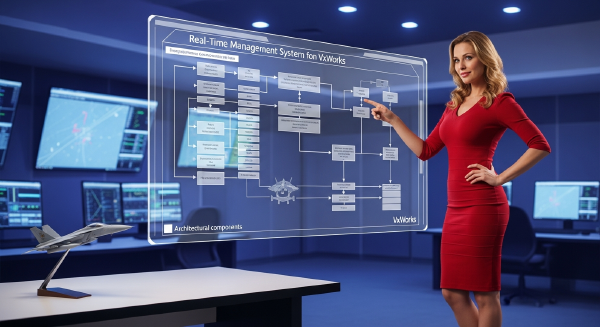
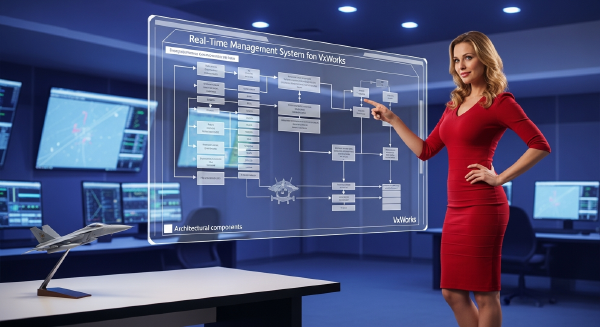
The proposed design adopts a closed-loop feedback architecture in which the Flight Control Computer continuously monitors drivetrain conditions and adjusts clutch motor operation accordingly.
Overall Control Flow #
The system operates through the following sequence:
- Acquire engine RPM data.
- Acquire rotor RPM data.
- Evaluate clutch state using predefined control logic.
- Generate clutch control commands.
- Drive the clutch motor through amplifier and H-bridge circuits.
- Monitor feedback signals and adjust operation in real time.
Core Components #
The architecture consists of four major subsystems:
| Component | Function |
|---|---|
| Flight Control Computer (FCC) | Central control and decision-making unit |
| Interlock Amplifier Circuit | Prevents unsafe H-bridge switching conditions |
| Clutch Drive Circuit | Controls motor direction and operation |
| Sensors | Provide engine speed, rotor speed, and clutch status feedback |
The Flight Control Computer integrates a main control board and an analog I/O board connected through a CPCI bus, enabling deterministic communication and high-speed data exchange.
⚙️ Hardware Design #
Flight Control Computer #
The Flight Control Computer serves as the central processing unit of the automatic engagement system.
Its primary responsibilities include:
- Real-time speed acquisition
- Clutch status monitoring
- Command generation
- Drive signal output
The analog I/O board supports multiple digital input and output channels while performing pulse-counting operations for precise speed measurement.
The speed sensors generate six pulses per revolution, enabling accurate calculation of both engine and rotor rotational speeds.
Measured data is transferred to the main control board via the CPCI bus, where higher-level control algorithms execute.
Interlock Amplifier Circuit #
Safe operation of the clutch motor requires reliable prevention of H-bridge shoot-through conditions.
The interlock amplifier circuit fulfills this requirement through a combination of:
- NOR logic gates
- Switching transistors
- Protection diodes
- Timing capacitors
- Current-limiting resistors
Purpose of the Interlock Design #
When motor direction changes occur, opposing H-bridge legs must never conduct simultaneously.
To prevent this condition, the amplifier introduces a controlled dead-time interval between switching events.
Key benefits include:
- Protection against excessive inrush current
- Reduced switching stress
- Improved motor reliability
- Enhanced overall system safety
The timing network ensures that one conduction path is fully disabled before the opposite path becomes active.
Clutch Drive Circuit #
Motor direction control is implemented through a solid-state relay-based H-bridge.
Relay Configuration #
The circuit uses four solid-state relays:
- Sr1
- Sr2
- Sr3
- Sr4
Operating modes are defined as follows:
| Relay State | Motor Direction | Function |
|---|---|---|
| Sr1 + Sr3 ON | Reverse | Clutch disengagement |
| Sr2 + Sr4 ON | Forward | Clutch engagement |
| All OFF | Stop | Hold position |
Back-EMF Protection #
When the motor is switched off, stored inductive energy can generate high-voltage transients.
To mitigate this effect, a transient voltage suppression (TVS) diode is installed across the motor terminals, providing:
- Back-EMF suppression
- Relay protection
- Improved system longevity
💻 VxWorks Software Architecture #
The software framework is divided into two layers:
- Analog Board Control Software
- Main Control Board Application Software
This separation improves maintainability and enables deterministic execution under VxWorks.
Analog Board Control Software #
The analog board executes a periodic low-level control task responsible for sensor acquisition and hardware interfacing.
Primary functions include:
- Collecting pulse signals from engine and rotor sensors.
- Calculating rotational speeds.
- Reading clutch alarm states.
- Packaging and transmitting status information to the main board.
- Receiving control commands from the main board.
- Driving digital output channels connected to the clutch circuitry.
This architecture minimizes latency while ensuring accurate and consistent feedback delivery.
Main Control Board Application Software #
The application layer operates under VxWorks using a multitasking design.
A periodic interrupt triggers execution every 20 milliseconds, ensuring deterministic scheduling and real-time responsiveness.
Task Structure #
The software consists of three prioritized tasks:
| Task | Responsibility |
|---|---|
| Data Reading Task | Acquire system status information |
| Data Processing Task | Execute clutch control logic |
| Command Sending Task | Output control commands |
Task synchronization is achieved using binary semaphores, ensuring predictable execution order and avoiding race conditions.
This design leverages VxWorks’ real-time scheduling capabilities to maintain consistent system behavior under varying operational conditions.
🔄 Automatic Clutch Engagement Algorithm #
The automatic engagement process is implemented as a multi-stage state machine designed to minimize drivetrain shock while preventing engine stalls.
Stage 1: Command Registration #
Upon receiving an engagement request:
- The command is registered.
- Conflicting commands are disabled.
- Safety interlocks are activated.
This guarantees exclusive control during engagement.
Stage 2: Initial Hold #
A hold command is issued before motor activation.
This prevents unintended reverse motion and establishes a known starting state.
Stage 3: Primary Engagement #
The clutch motor begins engagement.
During this phase:
- Engine speed is continuously monitored.
- Rotor speed feedback is analyzed.
- Belt tension buildup is detected through RPM changes.
A controlled drop in engine speed indicates successful load transfer.
Stage 4: Intermediate Hold #
Once the first engagement threshold is reached:
- Motor movement pauses.
- Minimum engine speed is recorded.
- Engine power recovery is allowed.
This prevents excessive loading during the transition process.
Stage 5: Secondary Engagement #
Final engagement begins only when predefined conditions are satisfied.
Typical criteria include:
- Engine speed recovery above a weighted threshold
- Rotor speed exceeding 120 r/min
This adaptive approach prevents premature clutch closure.
Stage 6: Completion Detection #
The system monitors clutch motor stop indicators.
Upon detecting completion:
- Motor operation stops immediately.
- Hold mode is activated.
- Engagement state is finalized.
Stage 7: Return to Flight Control #
The engagement command is cleared and control authority returns to the normal flight management system.
The entire process is executed automatically without operator intervention.
📊 Experimental Validation #
The proposed system was evaluated using an operational unmanned helicopter platform.
Multiple engagement cycles were conducted to verify:
- Reliability
- Repeatability
- Mechanical protection effectiveness
- Autonomous operation capability
Test Results #
Several important observations were recorded:
Stable Engine Operation #
The engine maintained a stable operating speed of approximately:
- 1500 r/min before engagement
This provided a consistent baseline for clutch activation.
Controlled Engagement Behavior #
During the first engagement phase:
- Engine speed decreased predictably.
- Belt tension increased smoothly.
- No abnormal vibration occurred.
The intermediate hold period allowed the engine to recover torque before proceeding.
Rapid Final Engagement #
The second engagement stage completed clutch tensioning in approximately:
- 2 seconds
Rotor acceleration remained smooth throughout the process.
Reliable Completion Detection #
The system accurately identified engagement completion and transitioned to hold mode without overshoot or oscillation.
Zero Critical Failures #
Across repeated tests:
- No engine stalls occurred.
- No clutch motor damage was observed.
- No transmission abnormalities were detected.
These results confirm the effectiveness of the proposed closed-loop control strategy.
🎯 Advantages of the Proposed Design #
Compared with conventional manual engagement methods, the proposed system offers several advantages:
Improved Safety #
Real-time monitoring and protection logic reduce the risk of:
- Engine stalling
- Clutch damage
- Transmission overload
Higher Repeatability #
Digital feedback eliminates variability introduced by human operators.
Reduced Mechanical Wear #
Controlled multi-stage engagement minimizes shock loading and component stress.
Autonomous Operation Support #
The design provides a key enabling technology for fully autonomous takeoff procedures.
Real-Time Performance #
The VxWorks multitasking architecture ensures deterministic execution and rapid response to changing system conditions.
📌 Conclusion #
This paper presents a complete automatic clutch engagement solution for unmanned helicopters based on the VxWorks real-time operating system.
The proposed system combines:
- Closed-loop speed feedback
- Robust hardware protection circuits
- Deterministic real-time software
- Multi-stage engagement control logic
Experimental validation demonstrates that the design delivers reliable, safe, and repeatable clutch engagement while significantly reducing the risks associated with manual operation.
Beyond unmanned helicopters, the architecture provides a practical reference for other electromechanical systems requiring precise clutch control, real-time feedback processing, and autonomous operation. Future enhancements may include adaptive engagement algorithms, predictive health monitoring, and deeper integration with next-generation autonomous flight management systems.